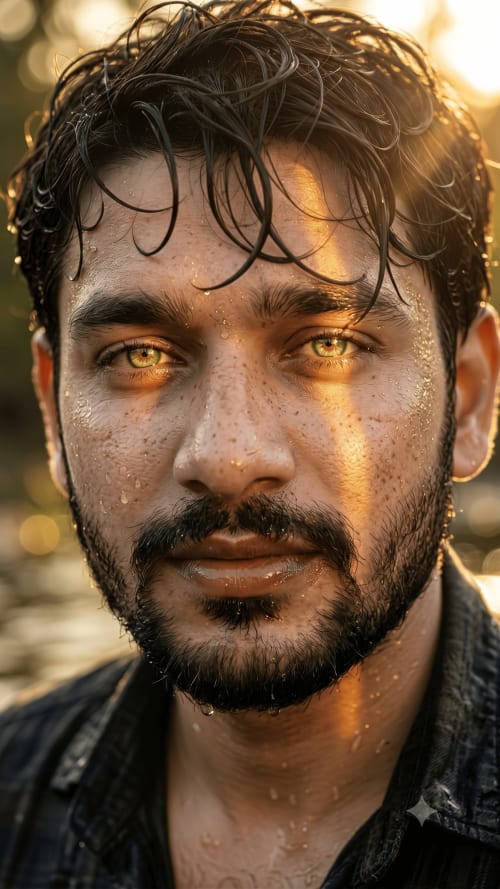
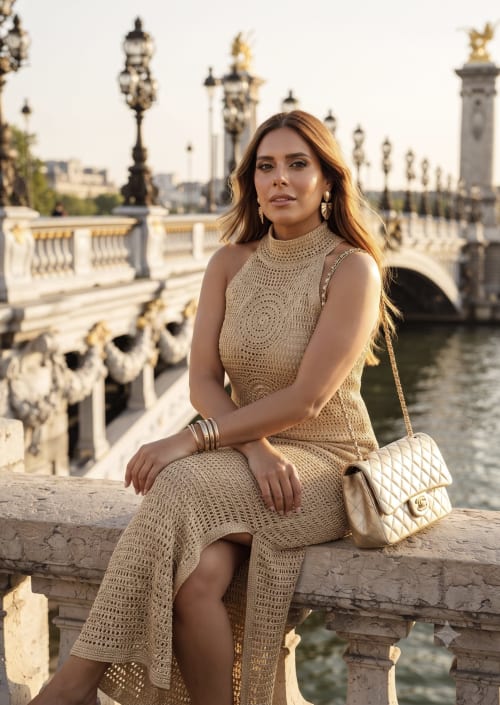
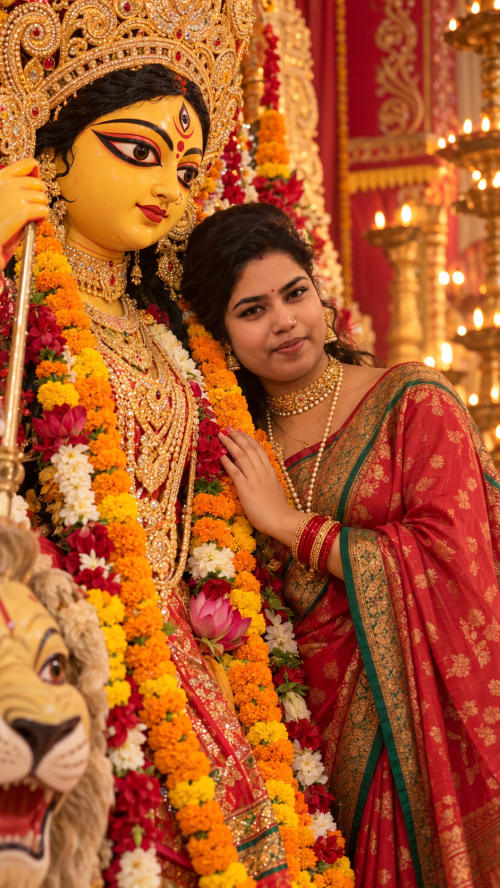
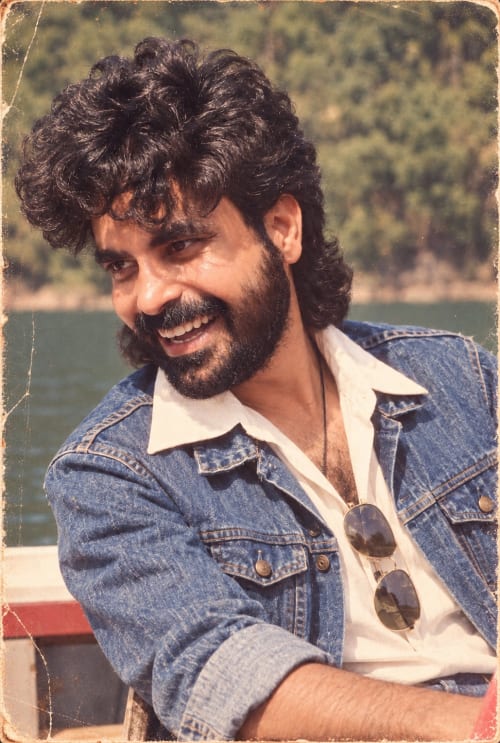
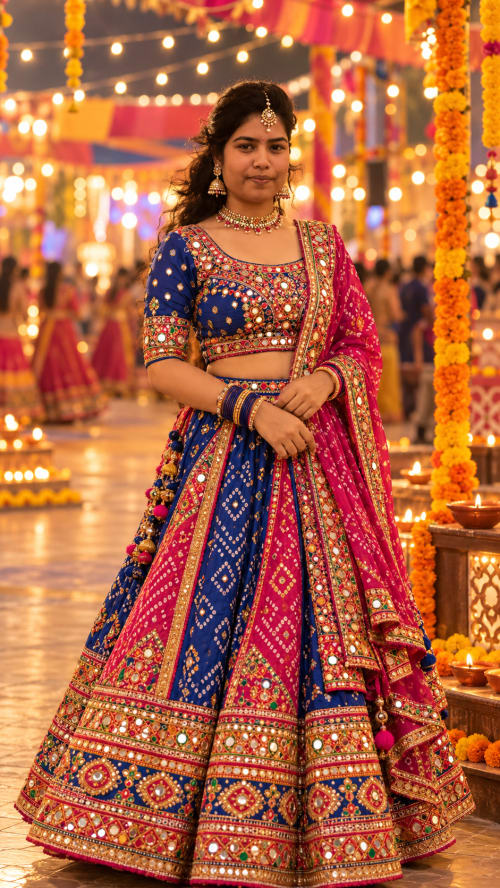
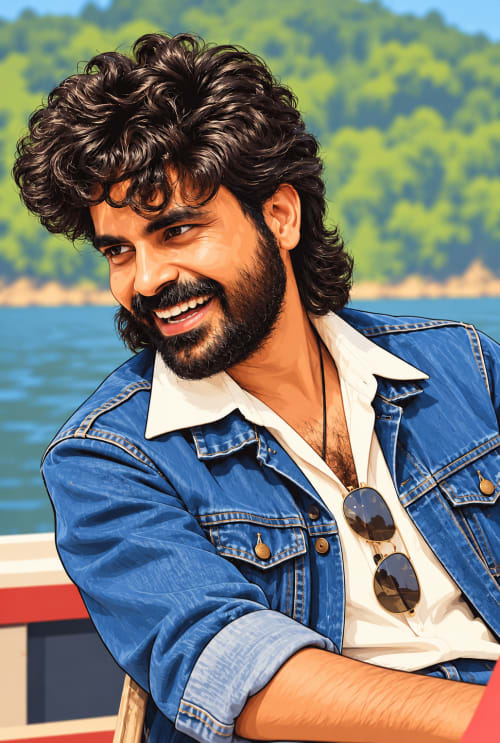
Use the uploaded image as the visual reference for the overall composition, environment and couple positioning. Create an ultra-photorealistic cinematic Navratri Garba night photograph in vertical 9:16. If a separate face reference is provided, use it as the definitive identity source for both subjects. Preserve each person’s exact identity, facial proportions, eyes, eyebrows, nose, lips, jawline, chin, ears, skin tone, age, hairstyle, facial hair and natural asymmetry. Do not replace, merge, redesign, beautify, slim, de-age or reinterpret either face.
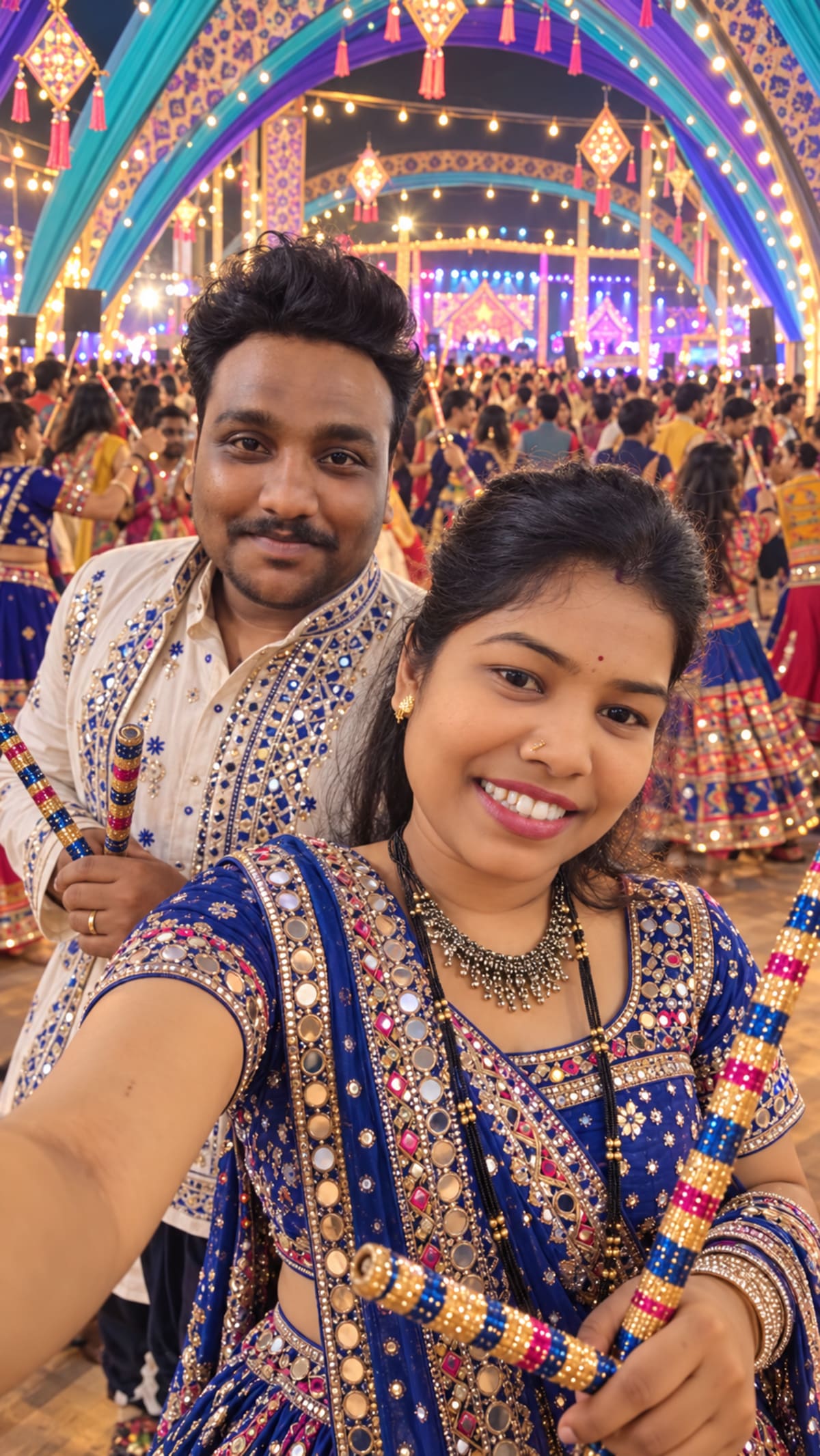
Create a premium version of the reference, not an exact copy. Place the couple beneath an illuminated Gujarati festival entrance tunnel. Use multiple curved frames with flowing turquoise, teal, violet and lavender fabric plus cyan and warm-white LED strips. Show realistic fabric weave, seams, folds and imperfections. The tunnel must create strong symmetrical leading lines toward the couple and distant Garba stage.
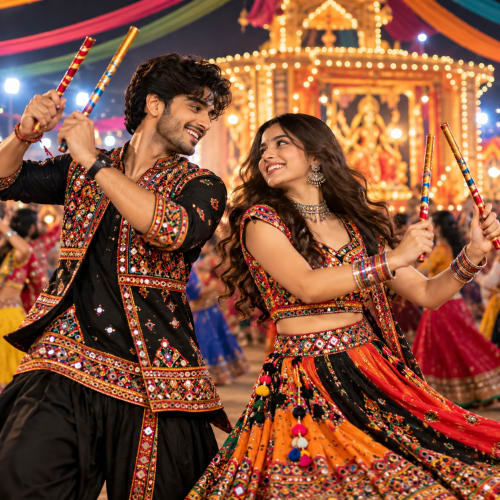
Place the woman slightly forward on the left and the man slightly behind on the right. Avoid a stiff pose. Both face the camera with relaxed shoulders, natural weight and warm expressions. The woman wears a royal-blue Gujarati chaniya choli with intricate silver mirror work, geometric embroidery, Bandhani-inspired details and an embroidered flowing dupatta, with tasteful oxidized silver jewelry, necklace and bangles. The man wears an ivory Gujarati kediyu with detailed blue embroidery, dark navy churidar or trousers and refined Gujarati mojari. Preserve realistic textile thickness, embroidery depth, threads, mirrors and folds.
Give both subjects decorated Dandiya sticks with natural positions and believable grips. Let one or two sticks extend slightly toward the camera for foreground depth without covering either face. Hands must have correct anatomy, five fingers and realistic joints.
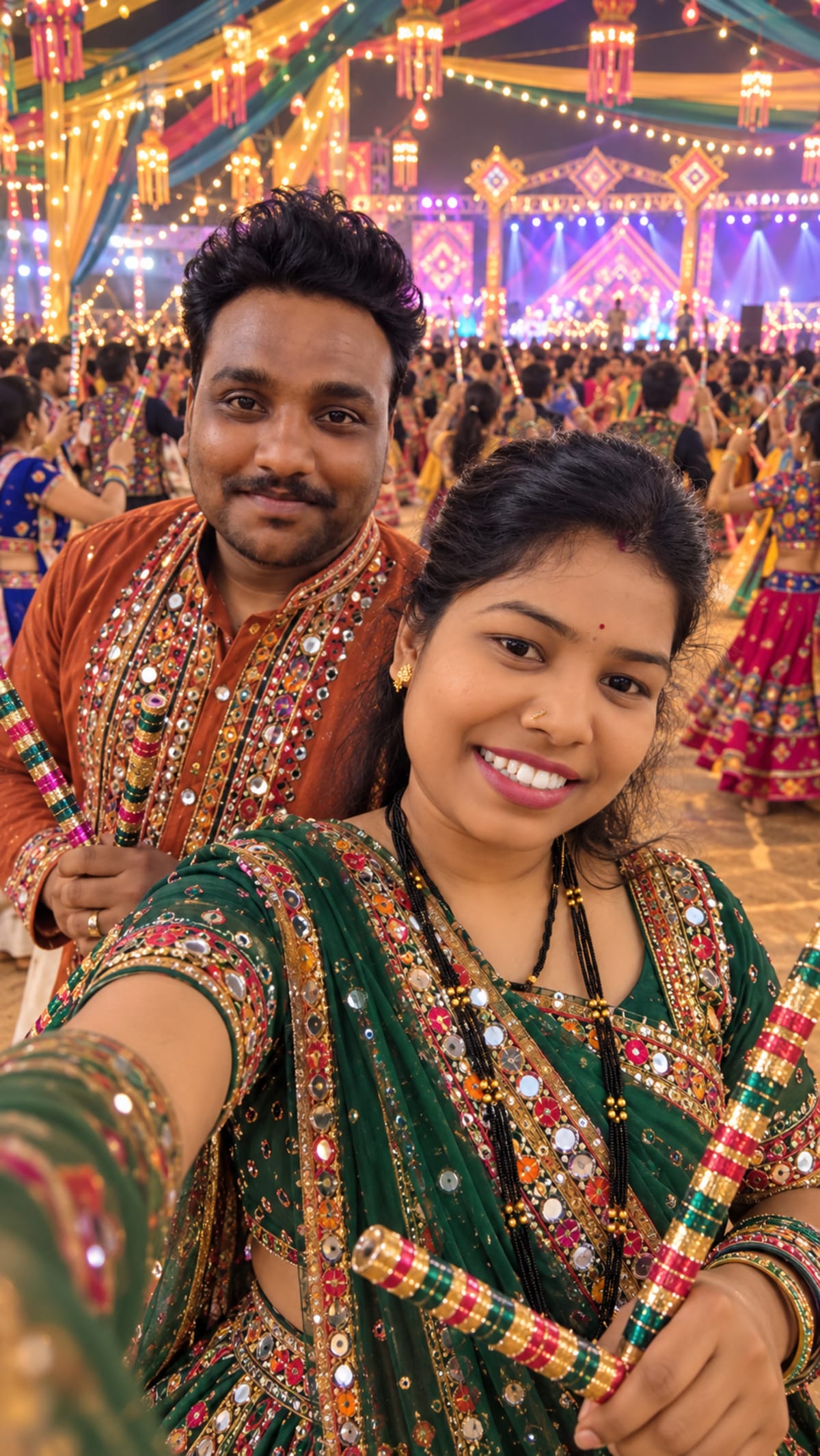
Behind them, create an authentic Gujarati Navratri celebration with a dense Garba crowd, traditional clothing, circular dance formations, decorative panels, hanging ornaments, distant performers and a festival stage. Keep the couple as the focal point. Add realistic atmospheric depth, subtle stage haze and diffusion around distant lights. Background dancers become progressively softer with distance.
Lighting: combine warm golden festival illumination with cool cyan and violet architectural light. Use soft neutral frontal fill for natural facial exposure, subtle rim light on hair and shoulders, and realistic shadows under the chin, clothing folds and feet. No beauty-studio lighting.
Camera: professional full-frame event photography, 28mm equivalent, f/2.8, ISO 640, fast shutter, realistic RAW rendering, moderate depth of field, natural lens perspective, subtle optical falloff and organic sensor grain. Keep faces and important foreground details sharp.
Skin must retain natural Indian tones, visible pores, subtle peach fuzz, realistic under-eye texture, natural lips and small skin variations. No skin smoothing or digital perfection.
Color grade: royal blue, ivory, turquoise, violet, silver and warm gold, with controlled saturation, cinematic contrast, soft highlight rolloff and detailed shadows.
STRICT NEGATIVE: no face replacement, identity change, face blending, altered facial proportions, beauty filter, de-aging, plastic or waxy skin, artificial symmetry, CGI, 3D render, cartoon, anime, illustration, distorted hands, extra or missing fingers, fused fingers, malformed limbs, broken wrists, unnatural anatomy, floating feet, duplicate people, duplicate Dandiya sticks, distorted clothing, excessive bokeh, excessive HDR, oversaturation, blown highlights, crushed shadows, unrealistic lighting, artificial skin, text, logo, branding or watermark.
Final result must look like a genuine professional Gujarati Navratri event photograph, cinematic, physically realistic and highly detailed.