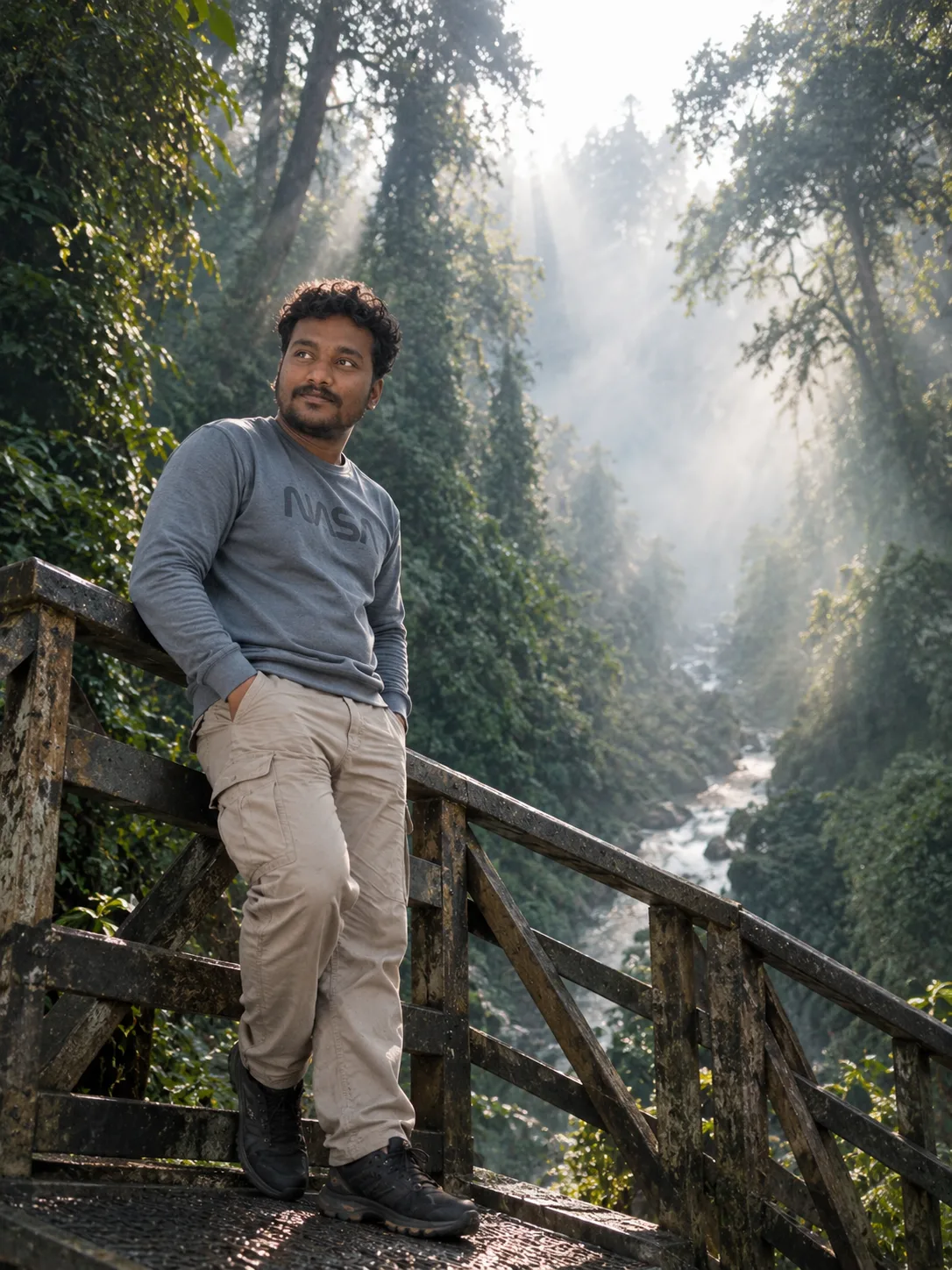
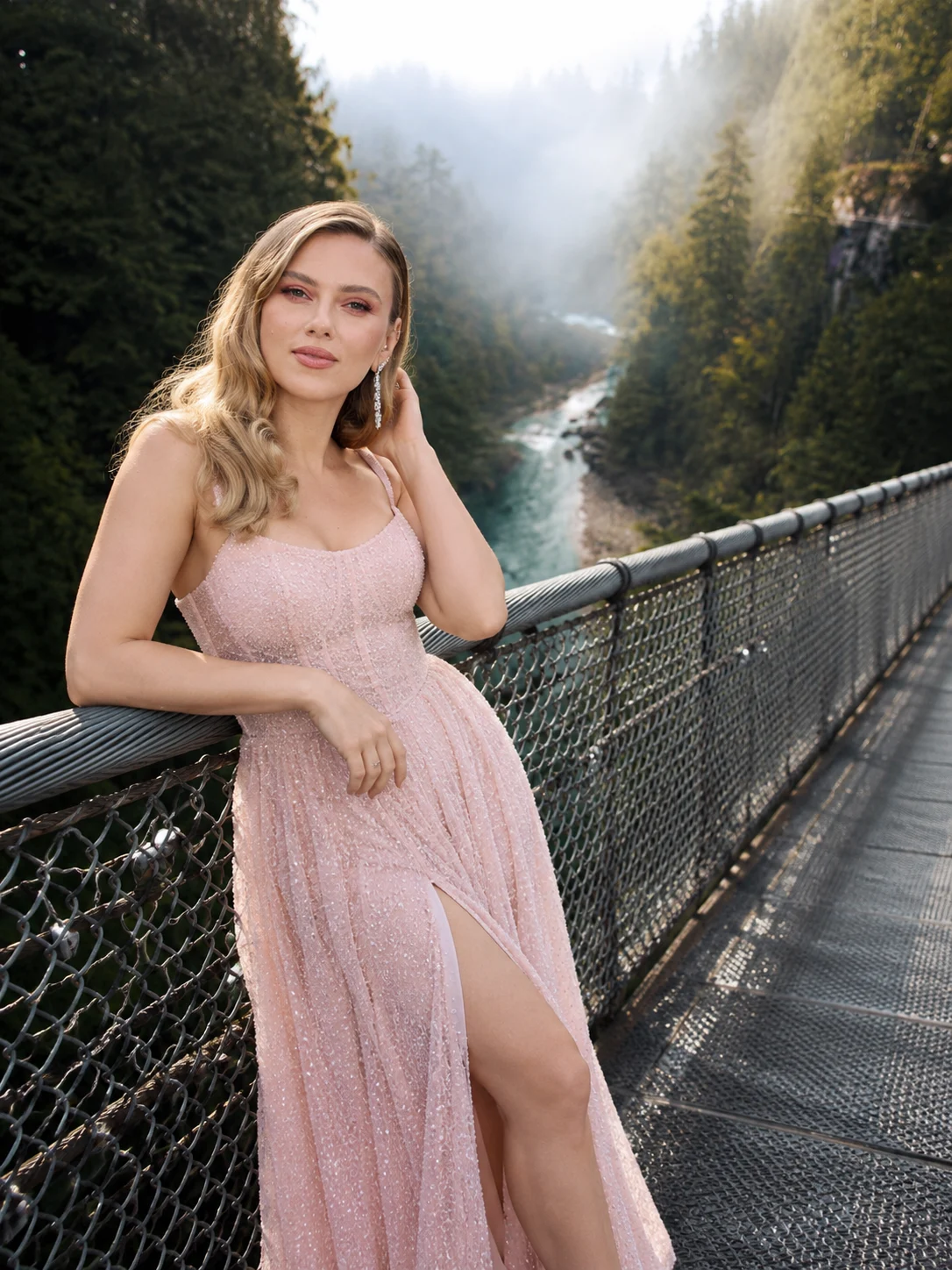
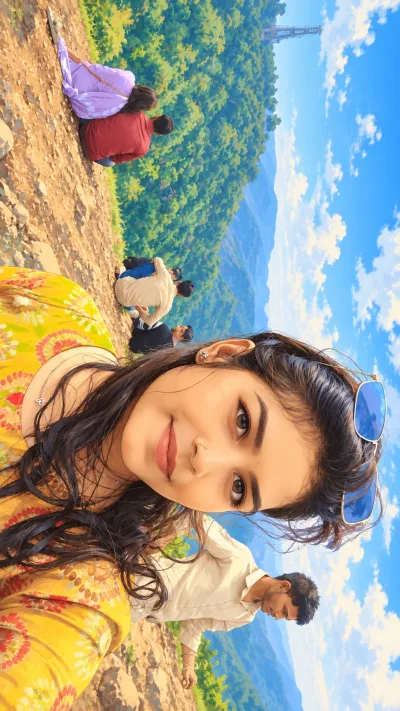
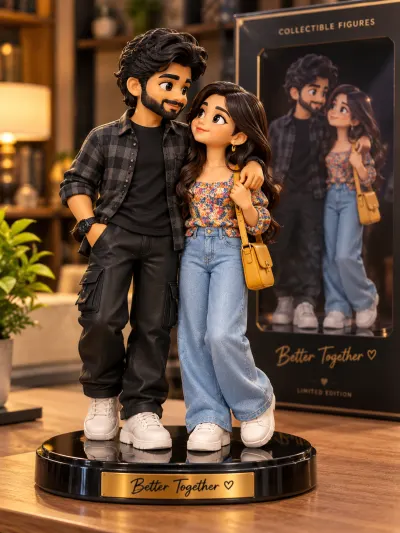
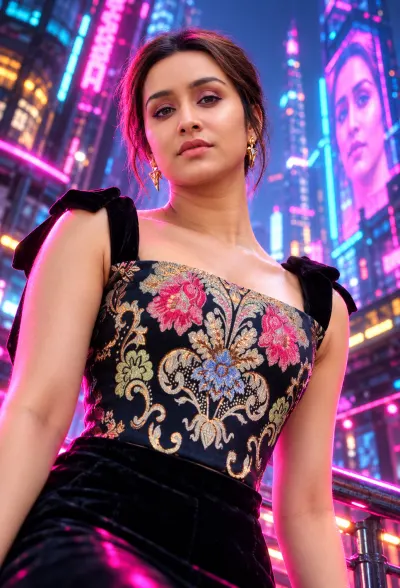
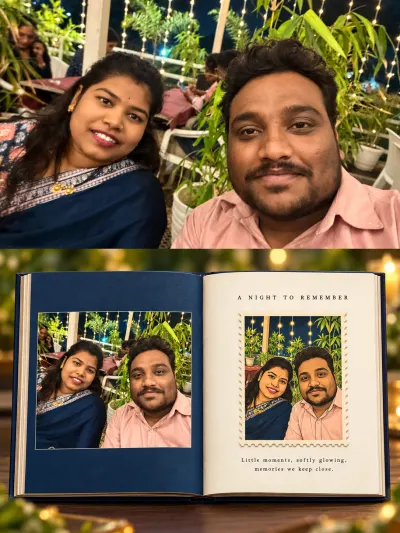
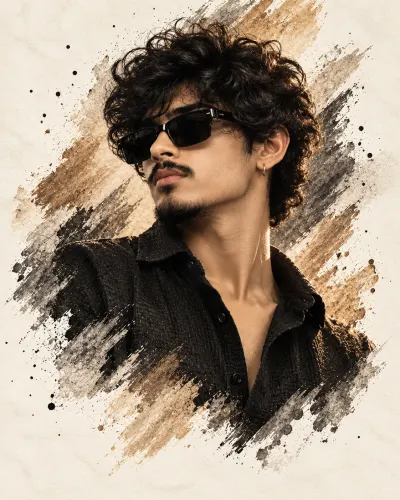
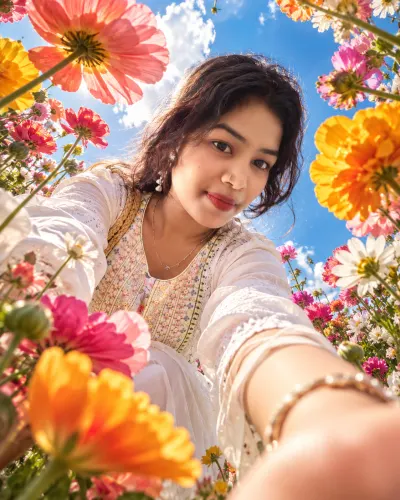
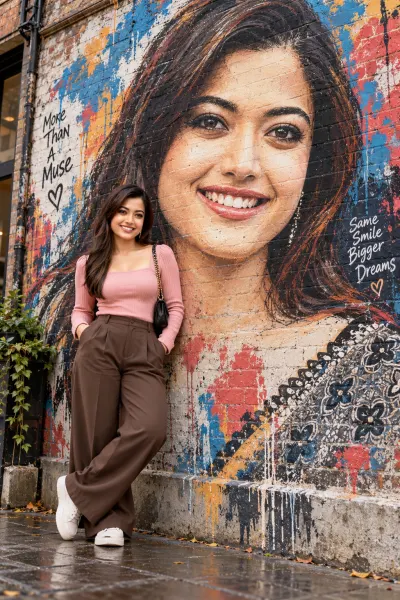
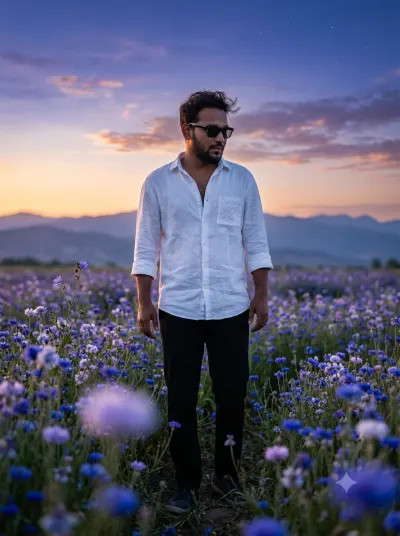
Use Image 1 as the source for the person and Image 2 as the background reference. Create a realistic, professionally photographed composite in which the person from Image 1 naturally belongs in the environment shown in Image 2.
### 1. PERSON PRESERVATION
Use the exact person from Image 1. Preserve their recognizable facial identity, hairstyle, skin tone, body proportions, clothing, and distinctive features. Do not beautify, reshape, replace, or regenerate the face.
Maintain the original person's natural body size and realistic anatomy. Keep clothing textures, folds, and colors faithful to the source image.
### 2. NATURAL PLACEMENT
Place the person on the bridge in Image 2, positioned slightly toward the left side of the walkway rather than directly in the center. Create a relaxed candid pose, such as standing beside the railing and looking toward the distant landscape.
Adapt the person's position and orientation naturally to the bridge perspective. Keep both feet grounded on the road surface, with correct proportions and believable contact shadows.
Do not copy the exact pose, arm placement, or framing from Image 2. Choose a fresh, natural pose that suits the person in Image 1.
### 3. BACKGROUND PRESERVATION
Use Image 2 as the environmental reference. Preserve its distinctive blue sky, scattered white clouds, distant green landscape, water, roadside vegetation, concrete bridge railing, and long roadway.
Keep the original camera perspective, horizon, road direction, architectural geometry, and overall environmental arrangement. Do not add buildings, vehicles, props, flowers, or unrelated scenery.
The background should remain visually faithful to Image 2, with no unnecessary redesign or artificial expansion.
### 4. LIGHTING AND INTEGRATION
Match the person's lighting, exposure, white balance, and shadow direction to the environment in Image 2.
Apply natural outdoor daylight to the face, hair, clothing, and exposed skin. Add subtle ambient reflections from the sky and surroundings. Ensure the person does not appear pasted onto the background.
Create realistic contact shadows beneath the feet and soft shadows consistent with the direction of sunlight. Match sharpness, depth of field, and image grain across both source images.
### 5. COMPOSITION
Use a vertical 3:4 aspect ratio. Keep the person clearly visible from head to toe, with sufficient space around the silhouette.
Maintain a balanced composition that showcases both the subject and the scenic bridge. Keep the horizon and leading lines of the road natural. Avoid exaggerated wide-angle distortion or artificial changes to body proportions.
### 6. IMAGE QUALITY
Enhance fine details, preserve natural skin texture, retain accurate clothing colors, and produce clean high-resolution photographic output. Use realistic color grading without excessive saturation, artificial glow, or beauty filters.
### STRICT NEGATIVE CONSTRAINTS
No face replacement, no identity changes, no body reshaping, no altered clothing, no distorted hands, no extra fingers, no floating feet, no mismatched shadows, no background rearrangement, no invented scenery, no text, no logos, no watermarks, and no social-media interface elements.
FINAL RESULT: A believable outdoor photograph featuring the original person from Image 1 naturally integrated into the scenic bridge environment of Image 2, with consistent lighting, realistic proportions, and a fresh composition.