# CINEMATIC MEMORY BOOK POSTER
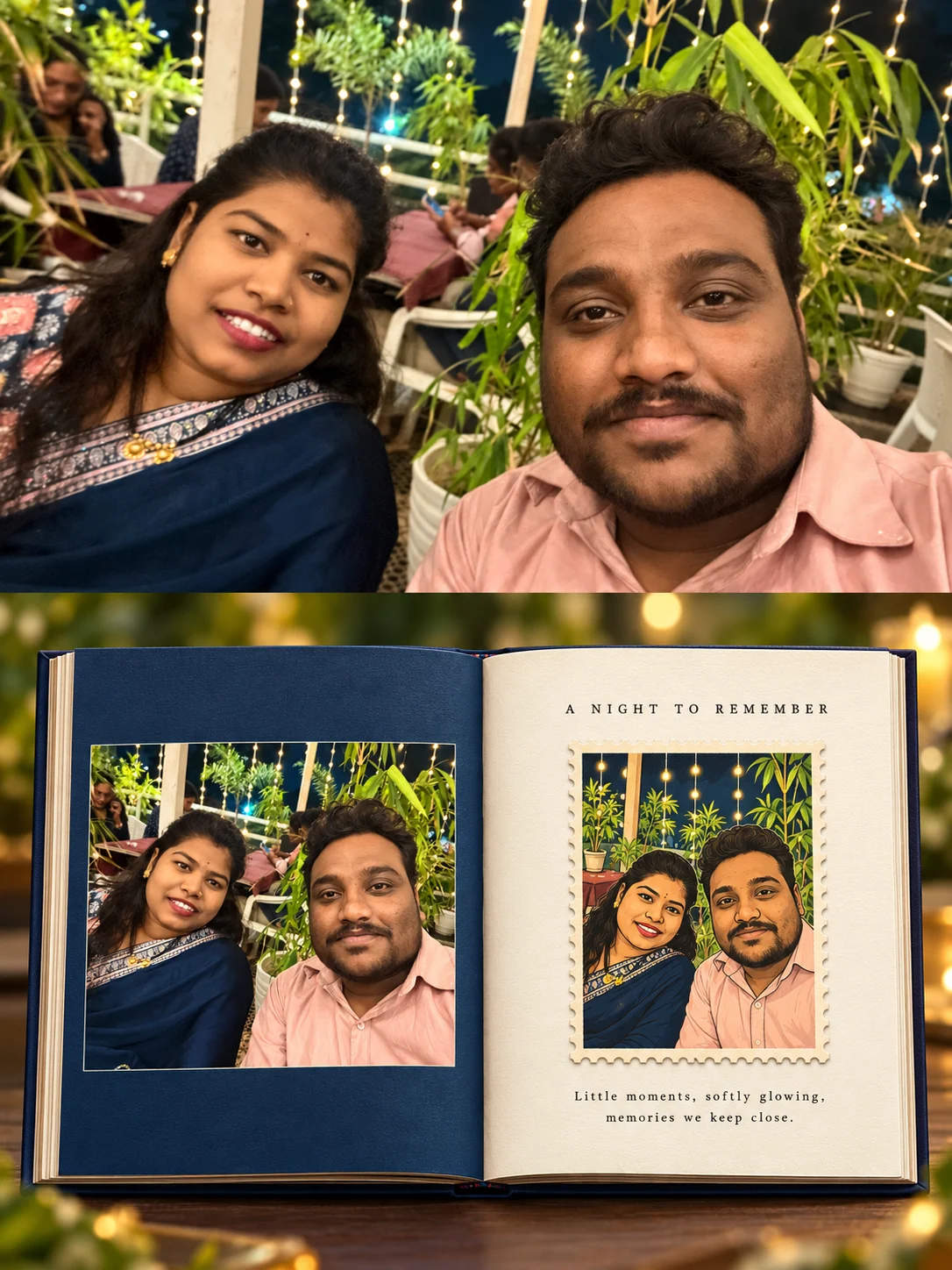
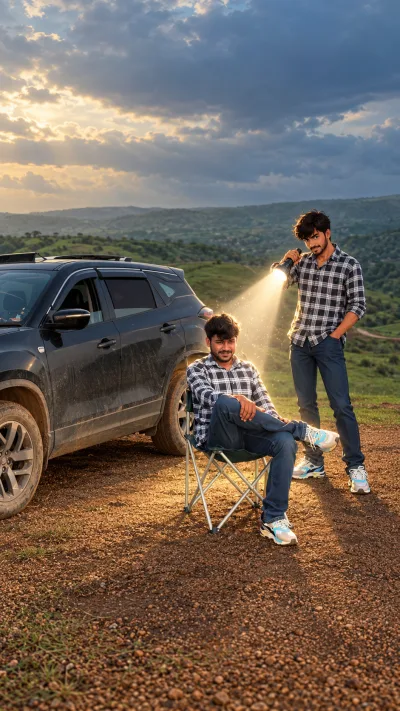
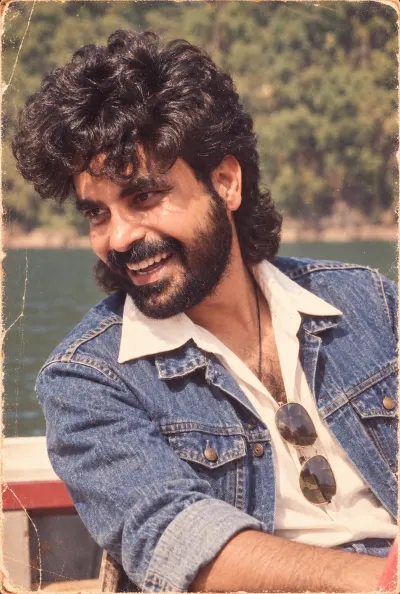
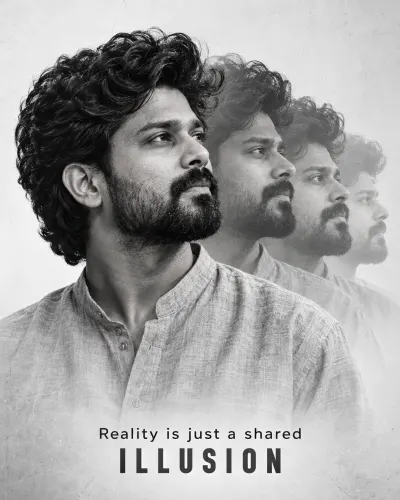
Use the uploaded photograph as the only visual source. Create one independent poster per photograph. Never combine different photos.
## 1. CANVAS AND LAYOUT
Create a vertical 3:4 poster with two strictly equal horizontal halves.
- Upper half: exactly 50% of total canvas height.
- Lower half: exactly 50% of total canvas height.
- The dividing line must be exactly at the vertical midpoint.
- No overlap, transition, or additional panel.
Treat the 50/50 split as a fixed layout requirement.
## 2. UPPER HALF: ORIGINAL PHOTOGRAPH
Place the original photograph edge-to-edge across the upper half.
Preserve the subjects' identity, facial features, expressions, hairstyles, skin tones, clothing, proportions, poses, and interactions. Retain the actual environment, lighting, perspective, and recognizable background details. Apply only subtle cinematic color grading.
**Mandatory landscape crop:** The upper panel must look like a genuine horizontal photograph, even if the uploaded source is portrait-oriented.
For a portrait source, create a careful landscape crop focused on the main subjects and essential scene details. Crop less important top and bottom areas as needed. Preserve faces and important interactions. For a landscape source, retain its natural composition while fitting the panel.
Never stretch, distort, widen, or invent scenery. No blurred side extensions, pillarboxing, side bands, or narrow portrait images floating inside the panel. Do not regenerate or replace the original subjects.
The upper half contains only the photograph, with no borders, text, book elements, or overlays.
## 3. LOWER HALF: OPEN HARDCOVER BOOK
Place one fully opened hardcover photography book in the lower half, viewed almost directly from above with minimal perspective distortion.
- Book width: approximately 86% of canvas width.
- Book height: approximately 46% of total canvas height.
- Center the book within the lower half.
- Align the spine exactly with the canvas's vertical centerline.
- Left and right pages must have identical dimensions.
- Each page occupies exactly 50% of the usable open-book width.
- All four outer corners, page edges, and the bottom edge must remain visible.
Include realistic hardcover thickness, layered paper edges, a natural spine curve, premium paper texture, and subtle shadows.
Keep the book entirely within the lower half. Perspective must not compress either page, shift the spine, or crop the book.
## 4. LEFT PAGE: ORIGINAL PHOTO REPRODUCTION
Extract a muted dominant color from the source photograph and use it across the entire left page.
Place exactly one rectangular reproduction of the original photograph in the center of the page.
- Width: approximately 72% of page width.
- Height: approximately 73% of page height.
- Center it horizontally and vertically.
- Maintain a broad, even border of the theme color on all four sides.
**The embedded image must also be landscape-oriented.** If the source is portrait, use a careful subject-preserving landscape crop similar to the upper photograph.
Use the actual photograph, not a generated recreation. Preserve recognizable subjects and essential scene details. No portrait-shaped image, blurred fills, stretching, distortion, irregular margins, or decorative frames.
## 5. RIGHT PAGE: TITLE
Use warm ivory paper with subtle texture and generous negative space.
Near the upper center, place one English title containing exactly 3 to 5 words.
- ALL CAPS, on one line only.
- Centered horizontally.
- Small black typewriter-style serif font.
- Slightly expanded letter spacing.
- Correct spelling and no line wrapping.
Generate a natural title inspired by the actual photograph. No subtitles, dates, or extra headings.
## 6. ONE VERTICAL POSTAGE STAMP
Place exactly one upright vertical rectangular stamp below the title, centered on the right page.
- Width: approximately 27% of the right page width.
- Clearly taller than wide.
- Perfectly straight, never tilted.
- All four corners and edges fully visible.
- Continuous, evenly spaced cream-colored perforations on all sides.
- Subtle aged-paper texture and a soft shadow.
Keep the stamp entirely inside the page. Never crop, compress, or overlap its edges. No postmarks, values, numbers, logos, or text inside the stamp.
### Stamp illustration
Create a playful editorial illustration inspired by 2 to 4 recognizable elements that genuinely appear in the uploaded photo.
Depending on the source, these may include people, a musical instrument, plants, a building, or the surrounding landscape.
Use thick black hand-drawn outlines, simple flat shapes,