Use the uploaded child's photograph as the mandatory identity reference. Create a joyful, photorealistic Navratri portrait in vertical 9:16 format.
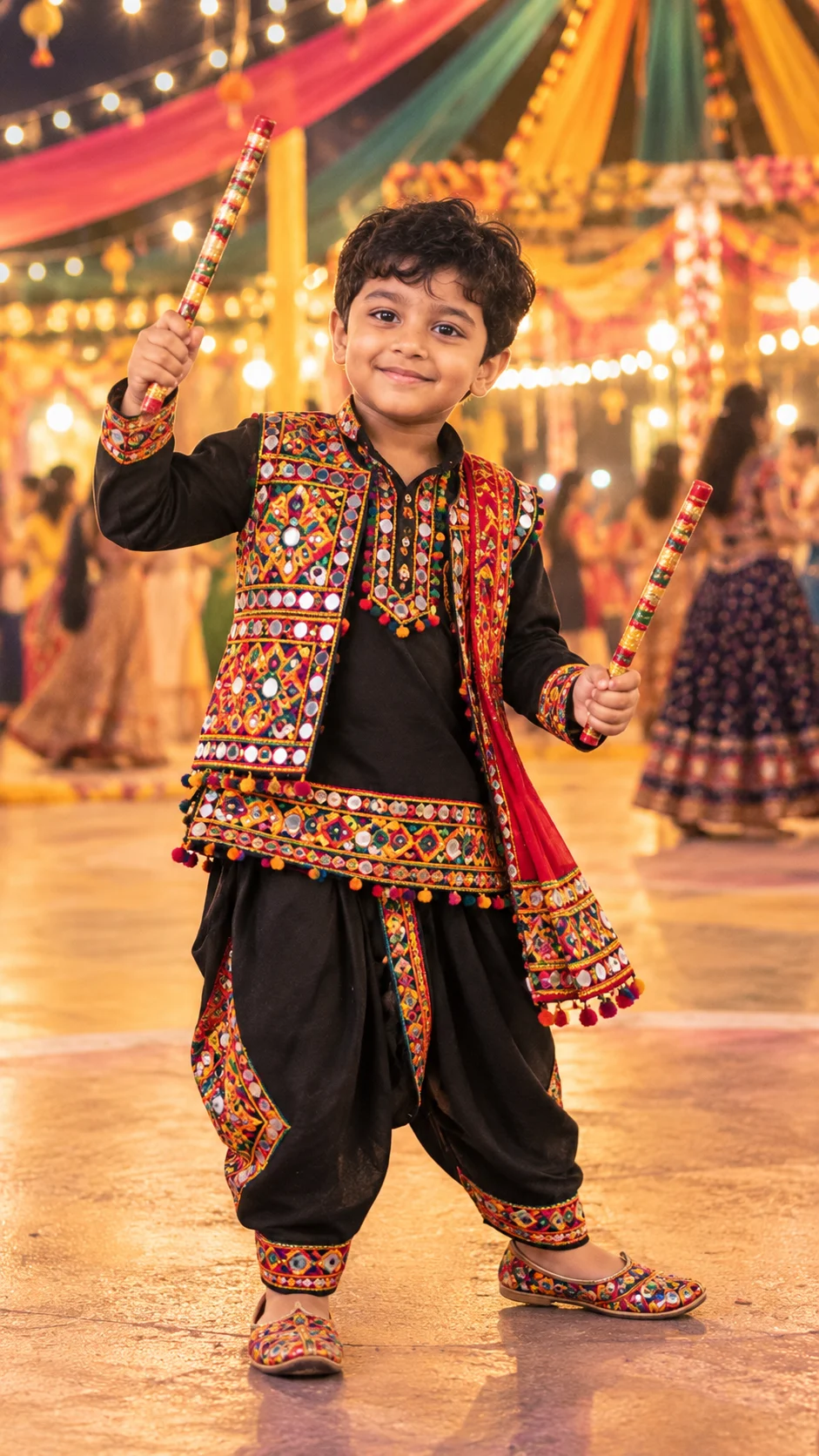
**CHILD IDENTITY:** Preserve the child's recognizable face, age-appropriate appearance, facial proportions, eyes, nose, lips, skin tone, hairstyle, and natural expression. Keep authentic skin texture and natural imperfections. Do not make the child look older, apply makeup, beautify the face, or create an artificial doll-like appearance.
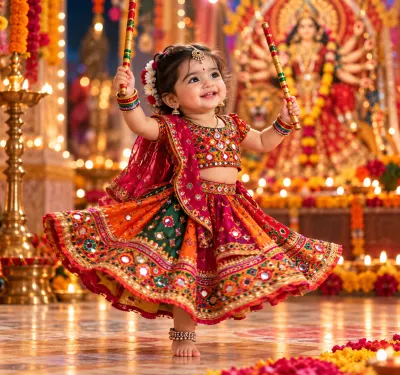
**FESTIVE OUTFIT:** Dress the child in a colorful, comfortable Gujarati Navratri outfit with tasteful mirror work, embroidery, a coordinated dupatta or traditional jacket, and comfortable ethnic footwear. Keep the outfit age-appropriate and realistic.
**POSE:** Show the child standing happily while holding two lightweight, decorated dandiya sticks safely and naturally. Use a gentle smile, relaxed shoulders, realistic hands, and natural childlike body proportions. The child must remain the clear main subject.
**BACKGROUND:** A beautifully decorated family-friendly Garba venue with warm fairy lights, marigold strings, colorful fabric decorations, and a few distant dancers. Keep the background softly out of focus so the child remains prominent.
**LIGHTING AND CAMERA:** Eye-level children's portrait photography, soft warm light on the face, accurate skin tones, natural shadows, detailed fabric texture, and a sharp face. Avoid exaggerated cinematic effects.
**COMPOSITION:** One child, full body visible, vertical 9:16, one continuous scene. Do not omit or shrink the child into the background.
**AVOID:** Adult-looking features, heavy makeup, altered identity, plastic skin, exaggerated eyes, unsafe props, distorted hands, extra fingers, duplicate children, text, logos, and watermarks.
Final image: a warm, natural children's Navratri portrait that looks like a real festive photoshoot.