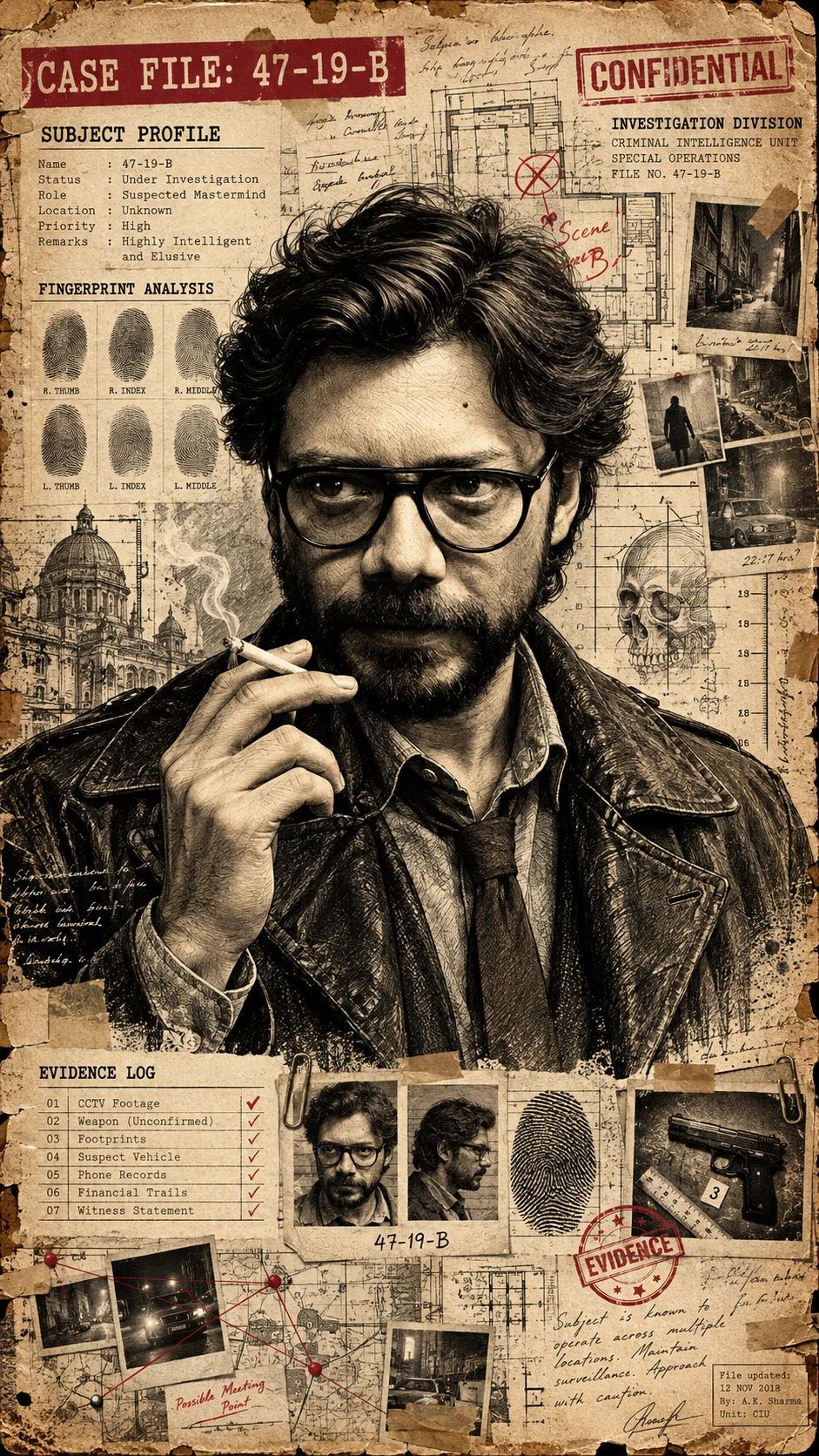
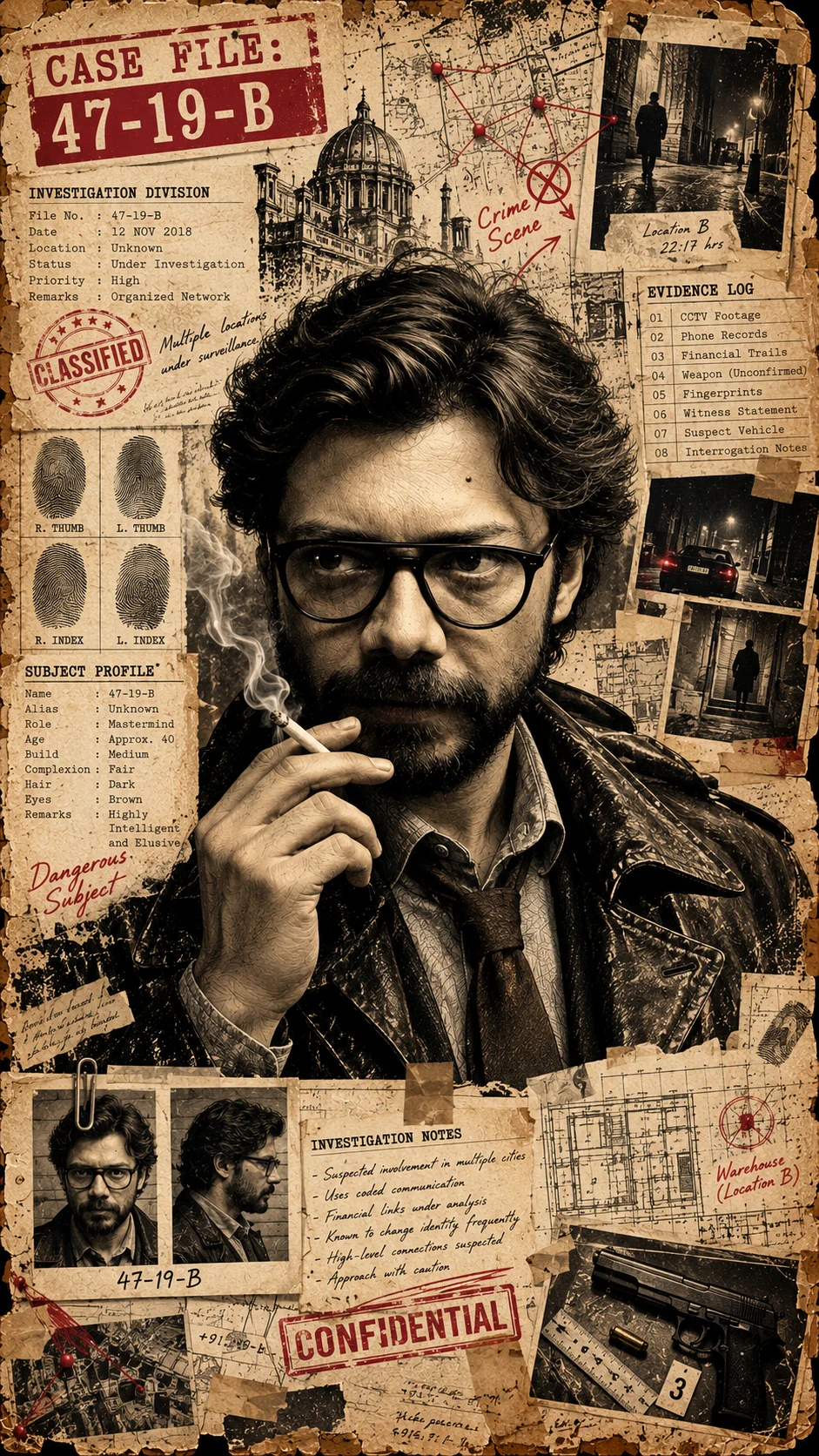
Create an ultra-detailed vintage detective case-file portrait in vertical 9:16 format, inspired by antique forensic dossiers, hand-engraved illustrations, and classified investigation records.
**MAIN SUBJECT:** A serious middle-aged male detective, centered in a chest-up portrait. He has short, neatly styled dark hair, deep-set eyes, realistic wrinkles, natural facial proportions, and a stern, contemplative expression. He wears a dark vintage leather jacket over a textured button-up shirt and holds a cigarette naturally near his face. His gaze is direct, intense, and mysterious.
**ART STYLE:** Combine intricate pen-and-ink engraving, fine cross-hatching, stippling, and vintage newspaper illustration. Render facial features, hair, wrinkles, clothing, and shadows with exceptionally detailed etched lines. Use deep black ink, graphite gray, and antique ivory highlights. The portrait should resemble an authentic historical investigative illustration.
**BACKGROUND:** Surround the subject with a densely layered forensic investigation dossier printed on aged cream parchment. Include architectural floor plans, technical diagrams, handwritten notes, fingerprint charts, anatomical sketches, evidence photographs, measurement grids, typed reports, inspection marks, and official-looking stamps. Arrange these elements naturally around the portrait.
**CASE FILE DETAILS:** Add a prominent faded-red label in the upper-left corner reading “CASE FILE: 47-19-B”. Include smaller headings such as “SUBJECT PROFILE”, “EVIDENCE LOG”, “FINGERPRINT ANALYSIS”, “CONFIDENTIAL”, and “INVESTIGATION DIVISION”. Add handwritten dates, red inspection marks, thin measurement lines, a small identification-photo panel near the bottom, and a narrow archival information strip.
**PAPER TEXTURE:** Create authentic aged parchment with yellowed ivory tones, worn edges, subtle stains, scratches, visible paper fibers, faded ink, photocopy imperfections, and slight printing misalignment. The document should appear decades old and repeatedly handled.
**COLOR PALETTE:** Restrict colors to antique beige, parchment cream, charcoal black, graphite gray, and restrained faded crimson red. Reserve red for case labels, stamps, evidence markings, and selected annotations.
**COMPOSITION:** Keep the portrait dominant, occupying approximately 65% of the frame. Position documentary elements around the head and shoulders without obscuring the face. Use a balanced editorial layout, dense marginal details, overlapping document layers, and clear visual hierarchy.
**LIGHTING:** Create sculptural contrast through engraved highlights, deep ink shadows, subtle vignette shading, and realistic tonal transitions. Keep the face sharply defined against the detailed background.
**PRINT DETAIL:** Fine etched lines, crisp document typography, authentic archival reproduction, realistic paper grain, intricate cross-hatching, accurate anatomy, and high-resolution editorial quality.
**NEGATIVE REQUIREMENTS:** No modern colorful graphics, futuristic interfaces, glossy surfaces, cartoon styling, smooth vector art, plastic skin, distorted hands, exaggerated facial features, excessive red, oversized lettering, random logos, watermarks, or modern photographic backgrounds.
**FINAL RESULT:** A sophisticated vintage detective dossier featuring an intricately engraved male portrait, layered forensic evidence, antique typography, distressed parchment, and restrained red case-file markings. Authentic investigative atmosphere, dramatic contrast, intricate details, and vertical 9:16 composition.